Corporate Apparel Printing in Pakistan
Corporate apparel printing in Pakistan and leather gifting sit in the same category for a practical reason. Both are worn or carried personally, both are judged on material quality before branding, and both are usually ordered by the same person for the same programme. 2Zee Business Solutions produces branded apparel and leather items at its Lahore facility for organisations distributing across the country.
What This Category Covers and Why Companies Order It
This category holds two related product families. The first is corporate apparel: polo shirts, t shirts, jackets, and caps carrying a company mark by embroidery or print. The second is leather corporate gifts: wallets, card holders, keychains, diary covers, and desk items branded by debossing or laser engraving.
Apparel serves visibility and belonging. A branded uniform makes staff identifiable to customers, removes daily dress decisions, and creates visual consistency across a floor or a site. Event and campaign apparel does the same job temporarily.
Leather serves recognition. It is the material companies reach for when a gift needs to signal seniority without being extravagant, which is why a wallet or card holder appears in almost every management level gifting programme in the country.
Three ordering patterns dominate. Uniform rollouts come first, typically annual or biannual, covering an entire staff population. Joining kits are second, where an item of apparel and a leather piece go into a new employee's welcome set. Recognition and executive gifting is third, usually smaller quantities at higher unit value.
The operational reality of corporate apparel printing is that branding is the easy part. Sizing is what determines whether the order succeeds, and it is addressed properly further down this page.
Apparel and Leather Range at 2Zee
Seven products are listed on this page, spanning both families.
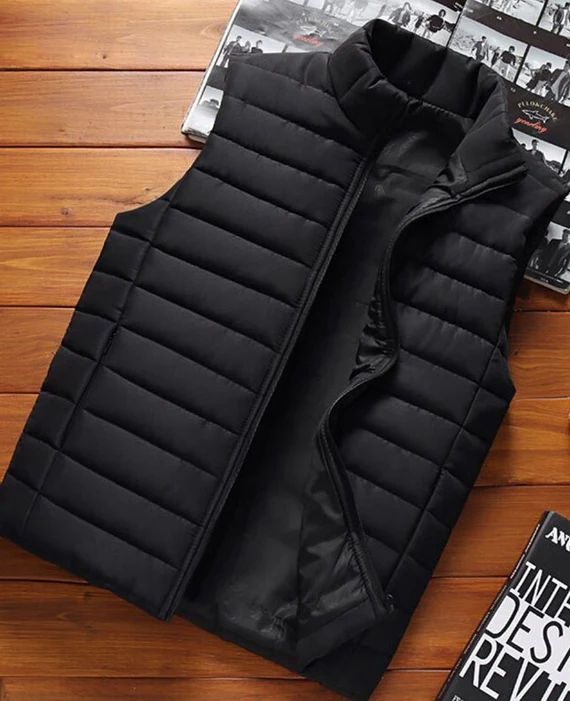
- The Sleeveless Jackets are the apparel anchor. They layer over a shirt without restricting arm movement, which is why field teams, site supervisors, event crews, and delivery staff wear them. They take embroidery on the chest and screen or vinyl work on the back panel.
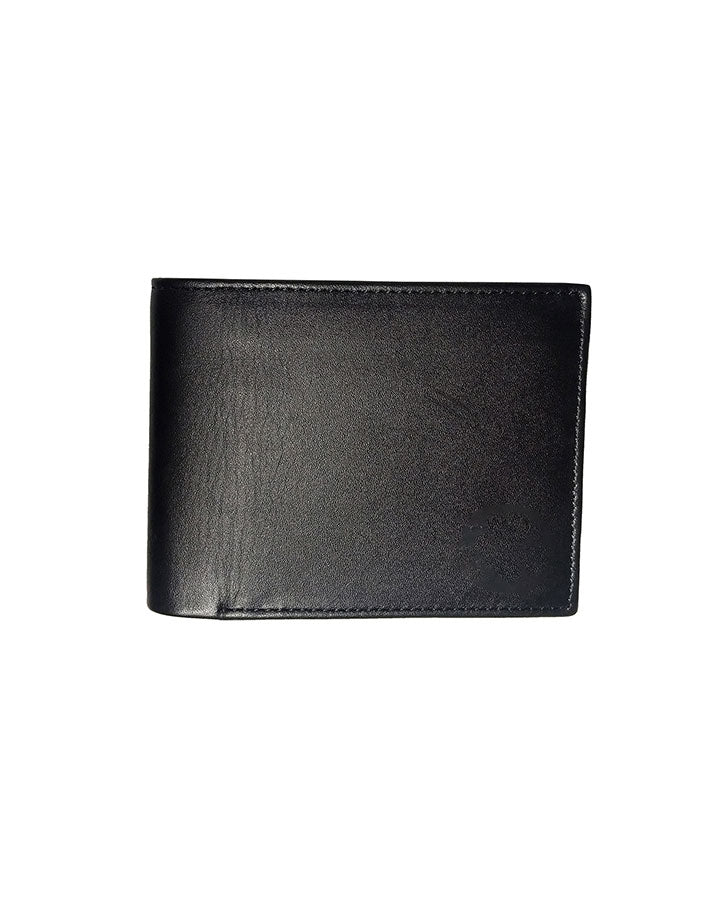
- The Executive Leather Wallet is the most ordered leather item for management gifting, taking a blind or foil debossed logo on the exterior panel.
- The Card Holders are the slim alternative, suited to distribution across a wider group where a full wallet exceeds the budget per head.
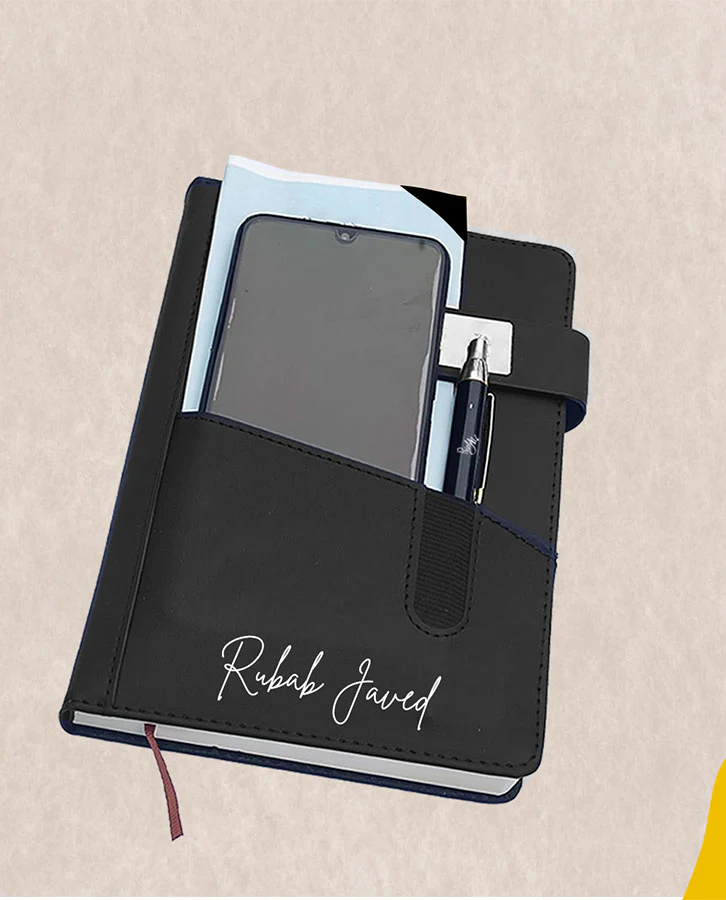
- The Executive Leather Cover Diary combines the two families, pairing a leather exterior with a working planner inside, and is a standard year end specification.
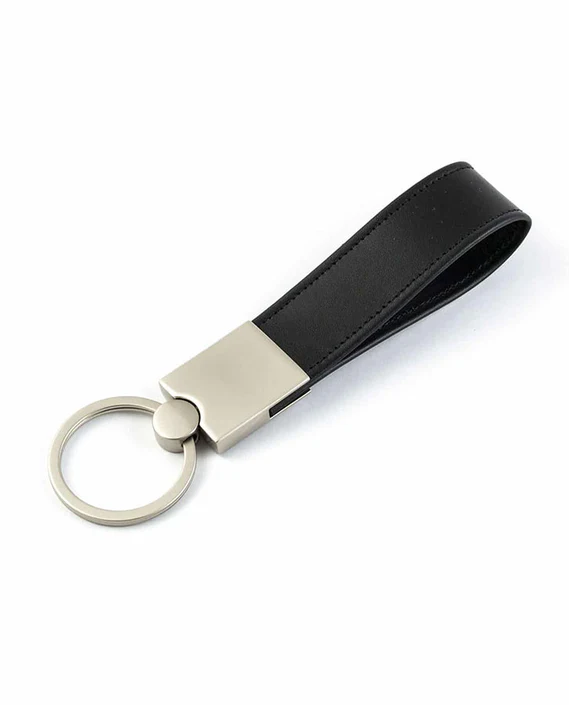
- The Leather Keychain is the volume leather item, low in unit cost and used to complete gift sets rather than to stand alone.
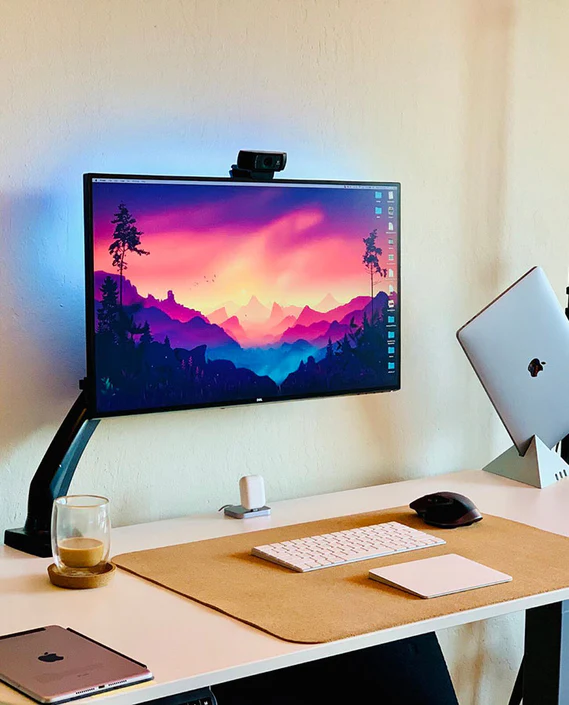
- The Extended Mouse Pad covers both mouse and keyboard and has become a routine desk item in technology sector joining kits.
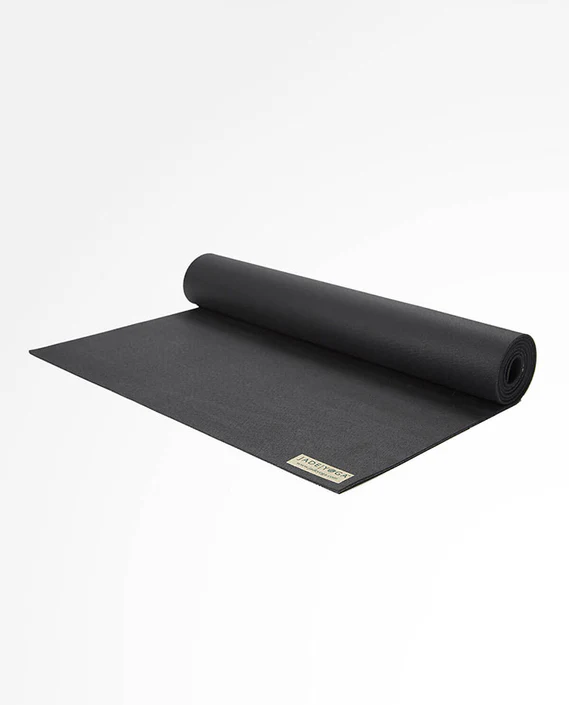
- The Yoga Exercise Mat is specified for wellness programmes and staff health initiatives, an increasingly common corporate gifting category.
Branded polo shirts Pakistan buyers order for staff, along with t shirts, hoodies, and caps, are produced to order alongside these listed items. Leather goods pair naturally with corporate branded pens and bulk corporate diaries from the wider merchandise range, while single piece personal orders belong on the customized t shirt retail page.
Fabrics and Garment Construction
Fabric weight is measured in GSM, grams per square metre, and it decides how a garment feels, how it holds shape, and how long it survives daily wear.
Pique knit at around 220 GSM is the standard polo construction. The textured surface holds the collar upright through a working day, which is precisely why polos are cut from it rather than from smooth jersey. It is the correct specification for customer facing staff.
Jersey knit at 180 GSM is the standard t shirt weight. It is smooth, takes large prints cleanly, and drapes well. Lighter 160 GSM stock suits mass event distribution where the garment is worn a handful of times.
Cotton polyester blends resist shrinkage, hold colour through repeated laundering, and dry faster, which matters for uniforms washed weekly for a year. Pure cotton feels better against the skin and is preferred for gifting apparel. Ring spun cotton is smoother than carded cotton and reproduces fine embroidery detail more cleanly.
Construction details separate a uniform that lasts from one that does not. Check collar interlining on polos, since an uninterlined collar curls within weeks. Check shoulder seam taping, which prevents stretching under repeated wear. Check button quality on plackets, because that is where a shirt fails first in daily use.
Sleeveless jackets are cut from polyester shells with quilted or fleece lining. The shell weight determines wind resistance, and lining choice determines whether the garment is comfortable indoors or only outdoors.
Leather Materials Explained Honestly
This is where buyers are most often misled, so the distinctions are worth stating plainly.
Genuine leather is real animal hide. It develops a patina with use, carries a distinctive smell, shows natural grain variation between pieces, and lasts years. That grain variation is a marker of authenticity, not a defect, and buyers who expect perfect uniformity across 200 wallets are expecting synthetic behaviour from a natural material.
Full grain and top grain are the higher grades, retaining the outer hide surface and its natural strength. Below these sit corrected and bonded grades, where the surface is sanded and treated or where leather fibres are reconstituted with adhesive. Bonded leather looks acceptable initially and delaminates over time.
PU leather is a polyurethane coating on a fabric backing. It is entirely uniform in appearance, costs a fraction of genuine hide, and takes debossing cleanly. It is not inferior for every purpose: for a 500 piece staff distribution where budget per head governs, PU is the sensible specification and nobody is deceived.
The rule that matters: match the material to the recipient. A debossed leather wallet with logo given to a board member should be genuine leather. The same item across a large workforce is reasonably PU. What should never happen is PU being sold as genuine, and any supplier should answer this question directly when asked.
Stitching tells you as much as the material. Even stitch spacing, finished edge treatment, and reinforced corners indicate proper construction. Card slot count and RFID blocking are functional specifications worth deciding before ordering rather than after.
Branding Methods for Apparel and Leather
Five methods apply across this category, and the substrate decides which is available.
Embroidery stitches the design in thread and is the standard for corporate apparel. It outlasts the garment, cannot crack or fade, and carries the most formal appearance. It suits logos and monograms rather than large artwork, since cost rises with stitch count. Artwork must first be digitised into a stitch file, a one time process per logo. Embroidered logo polo shirts on a left chest placement are the default corporate specification in Pakistan.
DTF printing transfers a printed film onto fabric under heat, reproducing unlimited colours, gradients, and photographs with no colour count penalty. It is the right method for multi colour campaign artwork and for small runs where embroidery digitising cost is disproportionate.
Screen printing pushes ink through a stencil, one screen per colour, and becomes economical above roughly 100 pieces with simple artwork. It is the most durable print method on cotton and the standard for large back panel work on event apparel.
Debossing presses the logo into leather under heat and pressure, leaving a recessed impression in the material itself. Blind debossing uses no colour and is the most restrained option. Foil debossing adds gold or silver into the recess for contrast. Neither wears off, because nothing sits on the surface.
Laser engraving marks leather by controlled burning, producing a darker tone within the impression. It handles finer detail than debossing and requires no die, making it more economical on small runs.
The practical rule for corporate apparel printing in Pakistan: embroidery for polos and jackets, DTF or screen for t shirts, debossing for leather at volume, and engraving for leather in small quantities or where detail is fine. Leather work runs on the same equipment as the laser cutting and engraving services division.
Sizing: The Part That Actually Goes Wrong
Branding failures are rare. Sizing failures are routine, and they are the reason uniform programmes get remembered badly.
Pakistani sizing runs smaller than imported labels. Staff who wear a medium in a foreign brand frequently need a large locally. Ordering by the letter each person names produces a batch of unwearable garments.
Collect chest measurements in inches rather than size letters. Circulate the measurement chart, have staff measured or self measured against it, and build the split from actual numbers. This takes an extra week and prevents the entire problem.
Order a sample set before committing. One garment in each size, distributed to representative staff across builds, settles more questions than any chart. On a staff uniform bulk order Pakistan covering several hundred people, this step pays for itself many times over.
Build a buffer. Add roughly 5 to 10 percent extra across the middle sizes, since those cover the most staff and absorb both new joiners and exchange requests through the year.
A typical distribution across a mixed Pakistani office workforce weights heavily toward large and extra large, with small and 3XL at the extremes. Your own population may differ, which is exactly why measured data beats assumption.
Discuss exchange terms at quotation. Unworn, unwashed garments in original packaging can usually be exchanged for a different size where stock allows, but this must be agreed before production rather than negotiated after delivery. Personalised garments carrying individual names cannot be exchanged at all, which is worth weighing before specifying per person naming on branded corporate apparel.
Specifications and Customization Options
Apparel sizes run small through 3XL with kids sizes on request. Polo colours cover white, black, navy, grey, maroon, and dyed options, with white and navy moving fastest in corporate work.
Embroidery placements are left chest at roughly 90mm by 90mm, sleeve at 60mm, and back yoke for larger marks. Print placements cover full front to A4, full back to A3, and sleeve.
Leather items carry deboss areas typically between 30mm and 50mm wide depending on the panel. Card holders accept a smaller mark than wallets, and keychains smaller still.
Additional options include inside neck label printing on apparel, contrast collar tipping on polos, individual name embroidery beneath the company logo, RFID blocking on wallets and card holders, and gift boxing on leather items.
Minimum order is 25 units, with tiered pricing at 100, 500, and 1,000 units. Standard production is 7 to 10 working days from mock up approval and rush production is 3 to 5 working days where blanks are in stock in the required sizes and colours.
Artwork and File Requirements
Send logos as AI, EPS, or vector PDF. Deboss dies are cut from vector paths and cannot be produced from a raster image at all, so this is a physical requirement rather than a preference.
Embroidery requires digitising, where your logo is converted into a stitch instruction file. Fine detail below roughly 3mm will not resolve in thread, and small text frequently needs to be enlarged or removed. The design team advises on simplification at mock up stage.
Supply Pantone references for brand colours. Embroidery thread is matched to the nearest available shade rather than mixed to order, so exact matching has practical limits that should be understood before approval.
For DTF and screen printing, supply artwork at 300 DPI at final print size in CMYK. Photographic artwork should be the original file rather than a compressed forward.
Where artwork needs rebuilding or digitising, the in house design team handles it free of charge with unlimited revisions, and a physical sample garment or leather piece can be produced before a large run commits.
Order Quantities and What Affects Your Cost
Base garment or leather grade is the largest cost driver. A 220 GSM ring spun pique polo sits well above a light blend body, and genuine full grain leather sits several times above PU.
Branding method is second. Embroidery is priced by stitch count, so a dense logo costs more than a simple mark. Screen printing carries a screen setup per colour. DTF has no setup but a higher per piece figure. Debossing requires a one time die.
Placement count is third. Chest, back, and sleeve is three separate operations rather than one.
Size range is fourth, since larger sizes consume more fabric and are frequently priced marginally higher.
Quantity is fifth. Setup, digitising, and die costs spread across the run, so custom corporate t shirts bulk orders at 500 or 1,000 units land materially below a 50 piece run of identical specification. For any company uniform printing Lahore or nationwide enquiry, send garment type, fabric weight, quantity, size split, branding method, and placement together and a written costing returns within 2 business hours.
Packaging and Kit Assembly
Apparel ships folded and individually polybagged with size labelling on each bag, which matters more than buyers expect. Sorting 300 unlabelled shirts by size at a distribution point is a genuine operational problem.
Leather items ship in individual boxes or dust bags as standard. For gifting, a rigid presentation box with a foam cradle is available, and an executive leather gift set pairing a wallet, card holder, and keychain in one box is the most requested year end configuration.
Kit assembly is handled in house. Apparel and leather items are packed alongside diaries, pens, or mugs into a single sealed box per recipient, labelled by name and size where required, so HR distributes one item per person rather than assembling components internally.
Bulk consignments travel in counted master cartons marked externally with quantity and size breakdown, which simplifies reconciliation on large deliveries.
Who Orders Corporate Apparel and Leather
Banking and financial services organisations order across both families: embroidered polos for branch and support staff, and leather wallets or card holders for management recognition and priority client gifting.
Telecom operators order the highest apparel volumes for retail outlet staff and dealer network teams, usually as annual rollouts across multiple cities with strict brand colour compliance.
FMCG companies order apparel for activation crews, in store promoters, and distributor sales teams, specifying blends that survive daily field wear through a campaign.
Real estate and construction firms order sleeveless jackets and polos for site supervisors and sales staff, and leather sets for investor and partner gifting at project launches.
Technology companies and startups order apparel for team identity and events, and mouse pads and card holders for joining kits. Pharmaceutical companies order polos for field force teams and leather items for specialist gifting. Education institutions order apparel for staff, sports teams, and events. Government departments order leather sets for delegation exchanges, and NGOs order field team apparel with dual logo branding where donor organisations are involved.
Production Timeline and Delivery
Day one covers enquiry and quotation. Send garment or item type, quantity, size split, branding method, artwork, and your deadline. A costing returns within two working hours on business days.
Days two to four are design, digitising, and sampling. Embroidery files are digitised, deboss dies prepared, and mock ups issued. For uniform programmes a physical sample garment is strongly recommended at this stage, since fit and fabric hand cannot be judged from an image.
Days five to nine are production. Garments are pulled or cut, branding applied, leather items debossed or engraved, and each batch inspected against the approved sample. Material, branding, and stitching checkpoints apply before clearance.
Day ten is dispatch. Lahore deliveries arrive same day or next. Branded corporate apparel consigned to Karachi, Islamabad, or Rawalpindi typically arrives one to three days after dispatch, with Peshawar and Quetta occasionally a day longer. Apparel ships in volume rather than weight, so consolidating to one delivery address is materially cheaper than splitting several. Rush production runs 3 to 5 working days.
Why Choose 2Zee Business Solutions
2Zee Business Solutions has supplied 500+ organizations and 100+ brands across banking, telecom, technology, FMCG, pharmaceutical, education, government, and the development sector, with a catalogue of 200+ customizable products.
Embroidery, printing, leather finishing, inspection, and kit assembly are handled in house in Lahore by a team of 100+ employees. On apparel that control matters for a specific reason: thread colour and stitch density must stay identical across a 1,000 piece run and across a reorder six months later, and outsourced embroidery is where that consistency breaks.
Design support is free with unlimited revisions, digitising is handled in house, and every corporate apparel printing in Pakistan order runs through mock up and sample approval before production. Stitch files, dies, and specifications are retained so repeat orders match the original exactly. A dedicated account manager coordinates each programme on WhatsApp. Payment is accepted through JazzCash, EasyPaisa, and local bank transfer.
Common Mistakes Buyers Make
Ordering by size letter instead of measurement. Local sizing runs smaller than imported labels, and this single assumption produces more unwearable garments than any other error in the category.
Skipping the sample set. One garment per size distributed to representative staff settles fit questions that no chart resolves, and it costs almost nothing relative to a 300 piece run.
Specifying embroidery for a detailed multi colour logo. Thread cannot render gradients, and fine detail below 3mm disappears. Either simplify the mark for embroidery or switch to DTF.
Accepting a leather quote without asking the grade. Genuine, corrected, bonded, and PU are four different materials at four price points. Ask directly and specify in writing.
Personalising names on apparel without considering exchanges. A named shirt in the wrong size cannot be reissued to anyone else, which turns a routine size swap into a replacement cost.
Booking a uniform rollout two weeks before an induction date. Size collection alone takes a week, sampling another, and production 7 to 10 working days after that. Four to five weeks is realistic for a full programme.
Corporate Apparel and Leather in Lahore, Karachi and Islamabad
Lahore
Lahore is the production base. Embroidery, printing, leather debossing, inspection, and kit packing all happen at 871-B Faisal Town, which gives corporate apparel printing in Lahore the shortest turnaround and lowest delivery cost in the country. Procurement teams here can handle fabric samples, check stitch density on an embroidered logo polo shirts sample, and assess leather grade in person before committing a large rollout. Company uniform printing Lahore demand runs across restaurant groups, retail chains, universities, and the city's technology sector, with direct collection available.
Karachi
Karachi generates the largest apparel volume in this category. Banking, FMCG, and telecom head offices run staff uniform bulk order Pakistan programmes across branch and outlet networks, frequently splitting one production run to multiple addresses within the city. Humidity and heat make fabric selection consequential here, so lighter blends outperform heavy cotton for staff working full outdoor or unconditioned shifts. Branded polo shirts Karachi retail teams wear daily are usually specified in blends for laundering durability. Consignments arrive one to three days after dispatch.
Islamabad
Islamabad and Rawalpindi demand leans toward leather more than apparel. Government departments, development sector organisations, and diplomatic linked programmes order leather corporate gifts Pakistan suppliers produce for delegation exchanges and partner recognition, typically specifying blind debossing rather than foil. An executive leather gift set in a rigid box is the standard delegation specification. Where apparel is ordered, it is usually field team jackets and polos with dual logo branding. Twin city split deliveries ship in one consignment.
Faisalabad, Multan, Peshawar, Sialkot, Gujranwala and Quetta
Faisalabad buyers, operating at the centre of the country's textile industry, order branded apparel mainly for expo staff, trade delegations, and management teams rather than for volume. Multan and Peshawar demand runs to institutional uniforms and field team jackets, with lighter fabrics preferred through long summers. Sialkot export firms order leather corporate gifts for visiting international buyers, where material quality represents the company abroad. Gujranwala orders are largely industrial and dealer driven, and Quetta buyers favour lined jackets for winter field work. All six cities are served from Lahore with an account manager coordinating throughout.
How to Order
Step one is your requirement. Send garment or leather item type, quantity, size split if known, branding method, artwork, and your deadline. If sizes are not yet collected, send an estimate and confirm later, since artwork and digitising proceed in parallel.
Step two is the mock up and sample. You receive a digital proof showing branding at actual size on the actual colour, and a physical sample garment or leather piece for programmes above a hundred units. Revisions are unlimited and free, and approval is written.
Step three is production and delivery. Items are branded, inspected, folded and polybagged with size labelling, assembled into kits where required, and dispatched to one or several addresses. Lahore customers may collect from Faisal Town. Full specifications can be submitted through the request a quote page.
Frequently Asked Questions
What is the minimum order for corporate uniforms?
The minimum is 25 units. Tiered pricing begins at 100 units and improves again at 500 and 1,000, so custom corporate t shirts bulk orders at higher tiers land materially lower per piece. Embroidery digitising and deboss dies are one time costs that spread across the run, which favours larger quantities disproportionately.
How much does corporate apparel printing cost in Pakistan?
Cost depends on garment type and fabric weight, branding method, number of placements, size range, and quantity. Corporate apparel printing in Pakistan on a light blend t shirt with a single colour print sits far below an embroidered 220 GSM pique polo. Send those five details for a written costing within two working hours.
Which is better for a polo shirt, embroidery or printing?
Embroidery, in almost every corporate case. Pique knit has a textured surface that flat printing sits on poorly, while thread integrates into the weave. Embroidery also outlasts the garment and cannot crack. Printing is the better choice only when the logo carries gradients or several colours that thread cannot reproduce.
Can we get individual employee names on the garments?
Yes. Names can be embroidered beneath the company logo or applied in heat transfer vinyl on the back. Send the complete list in one spreadsheet with exact spellings. Note that named garments cannot be exchanged or reissued if the size is wrong, so confirm sizes carefully before specifying per person naming.
What GSM fabric is best for a corporate polo shirt?
220 GSM pique knit is the corporate standard. The weight keeps the collar upright through a working day, which is the visible difference between a professional uniform and a limp one by afternoon. 180 GSM jersey is the standard for t shirts, and lighter 160 GSM stock suits mass event distribution rather than daily wear.
Is the leather genuine or PU?
Both are available and the grade is stated on every quotation. Genuine leather develops a patina, shows natural grain variation, and lasts years. PU leather is uniform, costs a fraction, and debosses cleanly. Match material to recipient: genuine for executive gifting, PU for large distributions where budget per head governs.
Can we deboss our logo on a leather wallet?
Yes. A debossed leather wallet with logo is produced by pressing a metal die into the material under heat, leaving a permanent recessed mark. Blind debossing uses no colour, and foil debossing adds gold or silver for contrast. Supply vector artwork, since dies cannot be cut from raster images.
How do we collect staff sizes accurately?
Circulate a measurement chart in inches and collect chest measurements rather than size letters, since local sizing runs smaller than imported labels. Order a sample set of one garment per size for representative staff to try. Add 5 to 10 percent buffer across middle sizes to absorb new joiners and exchanges.
Can we exchange sizes after delivery?
Unworn and unwashed garments in original packaging can usually be exchanged where stock allows, but terms must be agreed at quotation stage rather than after delivery. Personalised branded corporate apparel carrying individual names cannot be exchanged, since a named garment cannot be reissued to another person.
Can leather items be packed as a gift set?
Yes. A rigid presentation box with a foam cradle holding a wallet, card holder, and keychain is the most requested executive leather gift set configuration. The box can carry the same debossed mark as the items. Full kit assembly is available so sets arrive sealed and labelled per recipient.
How many days does a bulk apparel order take?
Standard production is 7 to 10 working days from mock up approval, with rush completion at 3 to 5 working days where blanks are in stock in your sizes and colours. Corporate apparel printing in Pakistan for a full uniform rollout should allow four to five weeks total, since size collection and sampling precede production.
Do you make sleeveless jackets with a company logo?
Yes. Sleeveless jackets are embroidered on the chest and screen or vinyl printed on the back panel, and are the standard specification for field teams, site supervisors, and event crews. Shell weight and lining type are selected according to whether the garment is worn outdoors through winter or indoors year round.
Do you deliver corporate uniforms to Karachi and Islamabad?
Yes. Production happens in Lahore and consignments ship nationwide. Corporate apparel printing in Karachi and Islamabad orders arrive one to three days after dispatch. Rawalpindi, Faisalabad, Multan, Peshawar, Sialkot, Gujranwala, and Quetta are covered on the same schedule, with multi address splits prepared at packing and size labelled bags throughout.
Where can we get company uniforms printed in Lahore?
2Zee Business Solutions embroiders, prints, and finishes in house at 871-B Faisal Town, which makes Lahore the fastest option in the country. Standard production is 7 to 10 working days from approval and rush completion is 3 to 5 working days. Lahore procurement teams may inspect fabric and sample garments and collect consignments directly.
To place an order, contact 2Zee Business Solutions on WhatsApp at +92-328-7864444 with your garment or leather item, quantity, size split, and branding method, or call +92-42-35162883. Whether the requirement is 50 embroidered polos for a retail floor, a 1,000 piece company uniform printing Lahore rollout, or leather gift sets for a management programme, the sequence is the same: quote, sample, approval, production, dispatch. Full specifications can be submitted through the quote request page.