
No items in cart.
What Should an Employee Onboarding Package Include?
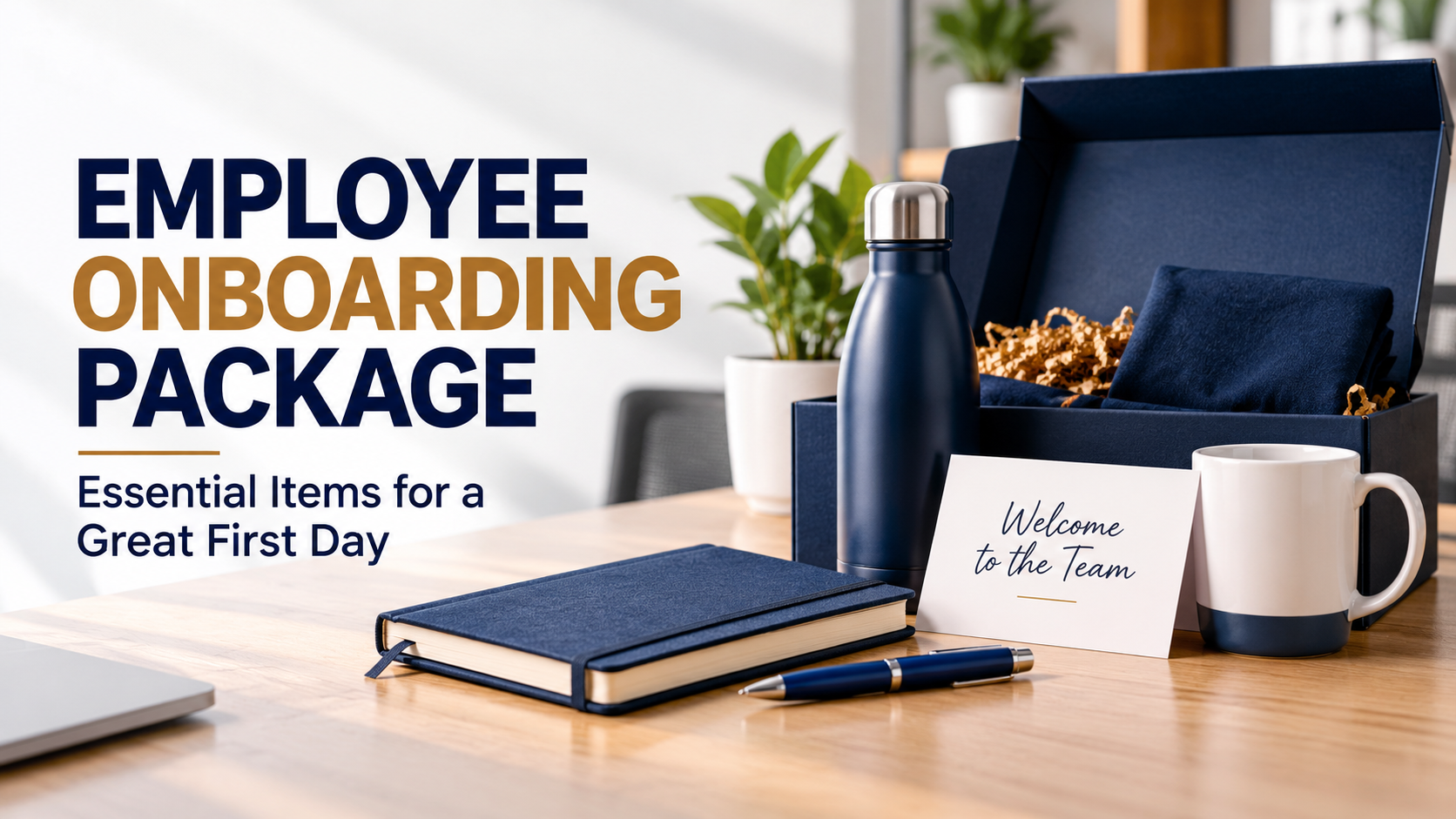
What Should You Include in an Employee Onboarding Package?
An onboarding package for new employees should include the essential information, practical work supplies, welcome materials, and relevant branded items that help a new hire prepare for their role. A well-planned package may contain an employee welcome letter, an onboarding checklist, company information, a notebook, a pen, a water bottle, and other items suited to the employee's working environment.
The right combination depends on the employee's role, workplace arrangements, company policies, budget, and the purpose of the welcome package. The goal is to provide useful resources rather than simply assemble a box of promotional merchandise.
What Is an Employee Onboarding Package?
An employee onboarding package is a collection of documents, resources, work essentials, and optional welcome gifts prepared for someone joining an organization. It supports the initial onboarding process by bringing relevant information and useful items together in one organized package.
An employee onboarding package may include three main components:
-
Welcome and information materials: A welcome letter, company overview, organizational contacts, and onboarding schedule.
-
Practical work essentials: A notebook, pen, stationery, identification materials, or role-specific supplies.
-
Branded welcome items: Company-branded merchandise, such as a mug, water bottle, bag, or diary, where appropriate.
These components serve different purposes. Information materials explain the workplace and next steps, practical supplies support everyday tasks, and welcome gifts add a personalized touch.
A physical package can complement digital onboarding resources, training, meetings, and access to company systems. It does not replace those essential parts of the onboarding process.
What Should an Employee Onboarding Package Include?
A useful employee onboarding package should combine essential information with practical items selected for the recipient. The following checklist provides a starting point for HR teams and business owners.
1. Welcome Letter and Personalized Message
A welcome letter is one of the simplest ways to introduce a new employee to the organization. It should be professional, friendly, and relevant to the employee's role.
Consider including:
-
The employee's name and job title.
-
A brief welcome message from HR, the hiring manager, or the team.
-
The employee's joining date and reporting contact.
-
A short explanation of the next steps in the onboarding process.
-
Contact details for questions about the first day.
Personalization does not need to be complicated. A correctly addressed letter with a genuine message can feel more thoughtful than a generic promotional insert.
2. Employee Handbook and Company Information
New hires need clear information about workplace expectations, policies, and available resources. A printed handbook, a concise information sheet, or a QR code linking to approved digital documents can make these resources easier to access.
Useful materials may include:
-
Company mission, values, and organizational overview.
-
Workplace conduct and relevant HR policies.
-
Attendance, leave, and communication procedures.
-
Information about benefits and employee support channels.
-
Emergency contacts and workplace safety information, where applicable.
Only include current, approved documents. Sensitive employee information and internal policies should be shared through appropriate, access-controlled channels rather than placed in an unsecured gift package.
3. Onboarding Checklist and First-Week Schedule
A practical onboarding checklist helps new employees understand what they need to complete and whom to contact.
A first-week schedule might identify:
-
HR orientation and required paperwork.
-
Meetings with the manager and immediate team.
-
Job-specific training sessions.
-
Instructions for accessing work tools and systems.
-
Follow-up meetings and outstanding onboarding tasks.
The schedule should reflect the employee's actual role and start date. A checklist is most useful when it complements the company's onboarding process rather than duplicating information that employees already receive elsewhere.
4. Notebook, Diary, and Writing Supplies
Stationery is a practical choice for many office-based onboarding packages. A notebook or diary can be used to record meeting notes, training instructions, priorities, and questions during the first few weeks.
Consider including:
-
A notebook or diary.
-
A quality pen.
-
Sticky notes or other basic stationery, if useful.
-
A folder for non-sensitive printed documents.
Choose items based on the employee's work habits. For teams that primarily use digital tools, a large stationery bundle may be unnecessary. For roles that involve meetings, fieldwork, or frequent handwritten notes, these supplies may be more useful.
5. Branded Mug or Water Bottle
A reusable mug or water bottle can be a suitable addition to an employee welcome kit when the item fits the workplace and the recipient's needs.
Before selecting one, consider:
-
Whether employees work mainly in an office, remotely, or on-site.
-
Whether the item is practical for everyday use.
-
The quality, durability, and ease of cleaning.
-
The visibility and placement of the company logo.
-
Packaging requirements and the intended budget.
Branded merchandise should be selected for usefulness first. Adding a logo does not automatically make an item valuable to the recipient.
6. Employee ID, Access Information, and Technology Instructions
Identification and access arrangements are important parts of onboarding, but they should be handled securely.
Depending on the organization, relevant materials may include an employee ID card, building access instructions, equipment collection details, or a guide to setting up approved work systems.
Passwords, authentication codes, and other sensitive credentials should never be printed in a welcome package. Provide access through the company's approved IT and identity-management processes.
7. Role-Specific Work Essentials
Different employees may need different resources. A standardized package can establish consistency, while a role-specific insert or additional item can address practical requirements.
Examples include:
-
Office employees: Notebook, pen, mug, and office orientation information.
-
Remote employees: Digital onboarding guide, equipment setup instructions, and relevant communication resources.
-
Field employees: Suitable stationery, an approved work bag, or role-specific materials.
-
Customer-facing teams: Product reference materials, approved brand guidelines, or customer-service resources.
These are illustrative options, not a universal checklist. Employers should confirm actual job requirements before purchasing or distributing equipment.
8. A Personalized Welcome Gift
A welcome gift is optional, but it can make a new employee's package feel more considered. Suitable choices may include a branded diary, a useful desk accessory, a reusable bottle, or a small combination of practical items.
When selecting a gift, consider workplace culture, accessibility, employee preferences, and any relevant company policies. Avoid assuming that every employee will appreciate the same product.
A thoughtful package does not need to be expensive or contain numerous items. Relevance, presentation, and practical value matter more than the number of gifts included.
Employee Onboarding Package Checklist: Essential vs. Optional Items
HR teams can use this table to separate onboarding essentials from optional merchandise before finalizing a package.
| Item | Priority | Main purpose |
|---|---|---|
| Welcome letter | Essential | Introduces the employee and communicates a personal welcome |
| Onboarding checklist | Essential | Clarifies tasks and next steps |
| Company and HR information | Essential | Explains relevant policies, contacts, and procedures |
| First-week schedule | Essential where applicable | Helps the employee understand planned activities |
| Notebook or diary | Role-dependent | Supports notes and everyday planning |
| Pen and basic stationery | Role-dependent | Provides practical writing supplies |
| Mug or water bottle | Optional | Adds a potentially useful welcome item |
| Branded bag | Optional | Provides a reusable carrying option |
| Personalized welcome gift | Optional | Adds a personal touch |
| Role-specific work supplies | Based on job requirements | Supports practical duties |
| IT setup guide | Essential where applicable | Explains approved equipment and system setup |
Planning principle: Complete the information and operational essentials first. Add optional gifts only after confirming the intended recipients, requirements, budget, and available products.
How to Choose Branded Merchandise for an Employee Onboarding Package
Branded merchandise can complement the welcome experience, but each item should have a clear purpose. Businesses should evaluate usefulness, quality, branding, and practicality before making bulk purchases.
Choose Useful Items Instead of Filling the Box
A small, coordinated set of practical products can be more suitable than a large collection of unrelated promotional items.
For example, a notebook, pen, and water bottle may suit an office-based employee better than several decorative products with little everyday use.
The combination should reflect the company's workplace environment and the needs of the people receiving it.
Keep Branding Consistent
When selecting branded onboarding merchandise, consider the following:
-
Logo placement: Keep logos clear and appropriately sized.
-
Colour consistency: Use approved brand colours where suitable.
-
Product quality: Evaluate materials, finish, and usability.
-
Presentation: Choose packaging that protects the items and keeps them organized.
-
Personalization: Add employee names or role-specific details only when the process supports accurate personalization.
Consistent branding can help a package look coordinated without making every item visually identical.
Consider the Packaging and Unboxing Experience
Packaging should protect the contents, present the items neatly, and suit the intended delivery method.
A rigid gift box may suit a curated welcome set, while simpler packaging may be more practical for large employee groups or routine distribution.
Consider the dimensions of the products, protective inserts, shipping requirements, storage space, and the amount of handling involved. For distributed teams, packaging should also be practical to transport.
How to Customize an Onboarding Package for Different Employees
A company can maintain a consistent onboarding process without giving every employee exactly the same package.
A practical approach is to create a standard core package and add optional items when a genuine need exists.
| Employee group | Core materials | Possible additions |
|---|---|---|
| Office-based employees | Welcome letter, handbook, onboarding checklist | Notebook, pen, mug |
| Remote employees | Digital resources, onboarding schedule, IT instructions | Shippable welcome gift or useful desk accessory |
| Field employees | Role instructions, contact details, relevant safety information | Suitable bag or approved work supplies |
| Managers | Standard onboarding information and role-specific resources | Diary or selected professional accessories |
| Interns or entry-level hires | Welcome information, training schedule, team contacts | Basic stationery or a small welcome gift |
These combinations are examples rather than fixed recommendations. The final package should follow the organization's actual onboarding requirements and any relevant safety, accessibility, or equipment policies.
For remote employees, confirm the delivery address and timing through the appropriate process. For office-based employees, coordinate distribution with HR or the employee's manager.
How to Plan the Budget for Employee Onboarding Packages
The cost of an onboarding package depends on the selected products, quantity, branding method, packaging, and delivery requirements. There is no single budget that suits every organization.
Instead of starting with a fixed list of products, establish a budget and prioritize the items that provide the greatest practical value.
Use this five-step planning process:
-
Set a per-employee budget. Determine the amount available for the complete package.
-
List essential materials. Account for information documents, stationery, and role-specific requirements.
-
Select optional gifts. Add merchandise only where it fits the purpose and available budget.
-
Calculate the full order cost. Include customization, packaging, printing, shipping, and any applicable taxes or other charges.
-
Review a sample before bulk production. Check product quality, branding, contents, and packaging before approving the complete order.
A simple budgeting formula is:
Total estimated cost = quantity × per-package cost + fixed setup and delivery costs
For example, if a company plans to prepare 50 packages, it should calculate the expected cost per package and then add any fixed setup or delivery expenses. This is a planning example, not a quoted product price.
When requesting a quotation, provide the estimated quantity, required products, logo artwork, packaging preferences, delivery destination, and expected delivery date. Ask the supplier to clarify what is included in the quotation and whether any minimum order quantity or production lead time applies.
How to Order Custom Employee Onboarding Kits
For businesses that want coordinated, branded merchandise, a custom employee kit can bring selected welcome items together in one presentation.
Before placing an order, confirm these details:
-
Purpose: Define whether the package is for new hires, interns, managers, or a wider employee group.
-
Contents: Finalize the required products and any optional additions.
-
Branding: Provide approved logo artwork and confirm the intended placement.
-
Packaging: Decide on the box style, product arrangement, and protective materials.
-
Quantity: Confirm the expected order size and any requirements for future batches.
-
Approval: Review a mockup or sample where available before authorizing production.
-
Delivery: Confirm the schedule, destination, packaging requirements, and order details.
Businesses exploring a coordinated set of branded welcome products can review 2Zee's Custom Employee Kit. The listed set includes a temperature bottle, diary, pen, ceramic mug, and presentation box, with product details and branding information available on the page.
Confirm current product specifications, customization options, pricing, availability, minimum quantities, and delivery timelines directly with the supplier before placing an order.
Common Mistakes to Avoid When Preparing an Employee Onboarding Package
A well-organized package should support the onboarding process rather than create extra work. Avoid these common mistakes:
-
Including too many promotional items: Unnecessary products can increase cost without meeting an employee need.
-
Forgetting essential information: Gifts should not take priority over approved HR documents and onboarding instructions.
-
Using outdated documents: Review policies, contact details, and schedules before distribution.
-
Ignoring role differences: A remote employee may need different resources from someone working on-site.
-
Overlooking product quality: Poorly made merchandise can undermine an otherwise thoughtful package.
-
Printing sensitive information: Keep passwords and confidential employee data out of unsecured packages.
-
Ordering before reviewing a sample: Confirm the artwork, product finish, contents, and packaging before approving bulk production.
-
Assuming every employee has the same preferences: Choose inclusive, practical items and follow company policies.
-
Leaving delivery until the last minute: Coordinate ordering, production, and distribution with the joining schedule.
These checks help HR and procurement teams prepare a package that is organized, relevant, and suitable for the intended recipients.
Frequently Asked Questions About Employee Onboarding Packages
What should an employee onboarding package include?
An employee onboarding package should include a welcome letter, relevant company information, an onboarding checklist, and any necessary first-week instructions. Depending on the employee's role and workplace, it may also include stationery, branded merchandise, or other practical work supplies.
What are the essential items for a new hire kit?
The essential items are the resources required to help the employee understand the organization and begin onboarding. These commonly include welcome information, approved HR materials, a schedule or checklist, and instructions for accessing relevant work systems. Physical gifts are optional unless a particular item is required for the role.
How do you create an onboarding package for employees?
Start by identifying the employee group's needs, then prepare the required documents and practical supplies. Select optional gifts, confirm branding and packaging, calculate the full cost, and review a sample before approving a bulk order. Coordinate delivery with the employee's joining date.
Should every employee receive the same onboarding package?
Not necessarily. A standard core package can maintain consistency, while role-specific materials or optional products can address different working arrangements and responsibilities. The contents should reflect actual requirements rather than assumptions about employee preferences.
Are branded gifts necessary in an employee onboarding package?
No. Branded gifts are optional. A useful onboarding package can consist primarily of clear information, practical supplies, and relevant instructions. Merchandise can be added when it fits the organization's budget, workplace culture, and employee needs.
Can companies customize employee onboarding kits with their logo?
Companies can explore branded employee kits where the supplier offers suitable customization options. Before ordering, confirm which products can be branded, the available logo placement, artwork requirements, minimum quantities, pricing, and production timelines.
What is the difference between an onboarding package and an employee welcome gift box?
An onboarding package focuses on helping a new employee get started through information, instructions, and practical resources. A welcome gift box focuses more on the presentation of selected gifts or branded products. A company can combine both purposes, but the essential onboarding information should remain easy to access.
How much should a company spend on an employee onboarding package?
The appropriate budget depends on the quantity, contents, customization, packaging, and delivery requirements. Businesses should establish a per-employee budget, prioritize essential resources, compare complete quotations, and review a sample before confirming the order.
Final Checklist for HR and Procurement Teams
Before distributing an employee onboarding package, confirm the following:
-
The welcome message and employee details are correct.
-
Relevant company and HR information is current.
-
The onboarding checklist and schedule are accurate.
-
Role-specific materials have been included where necessary.
-
Optional gifts are practical and appropriate.
-
Branding and packaging have been reviewed.
-
Sensitive information is handled securely.
-
The complete cost has been checked against the budget.
-
Product availability and delivery timelines have been confirmed.
-
The package is ready for distribution in line with the joining schedule.
Conclusion
An effective onboarding package for new employees combines clear information, practical resources, and optional welcome items that suit the employee's role and workplace. HR teams should prioritize essential onboarding materials, choose useful merchandise, maintain consistent branding, and confirm the complete cost before ordering.
For businesses considering branded welcome products, a coordinated employee kit can bring selected items together in a professional presentation. The best package is not necessarily the largest or most expensive one; it is the one that meets the employee's practical needs and supports a well-organized onboarding process.